

Thumb Stiffness, Locking, and Pain (Trigger Finger)


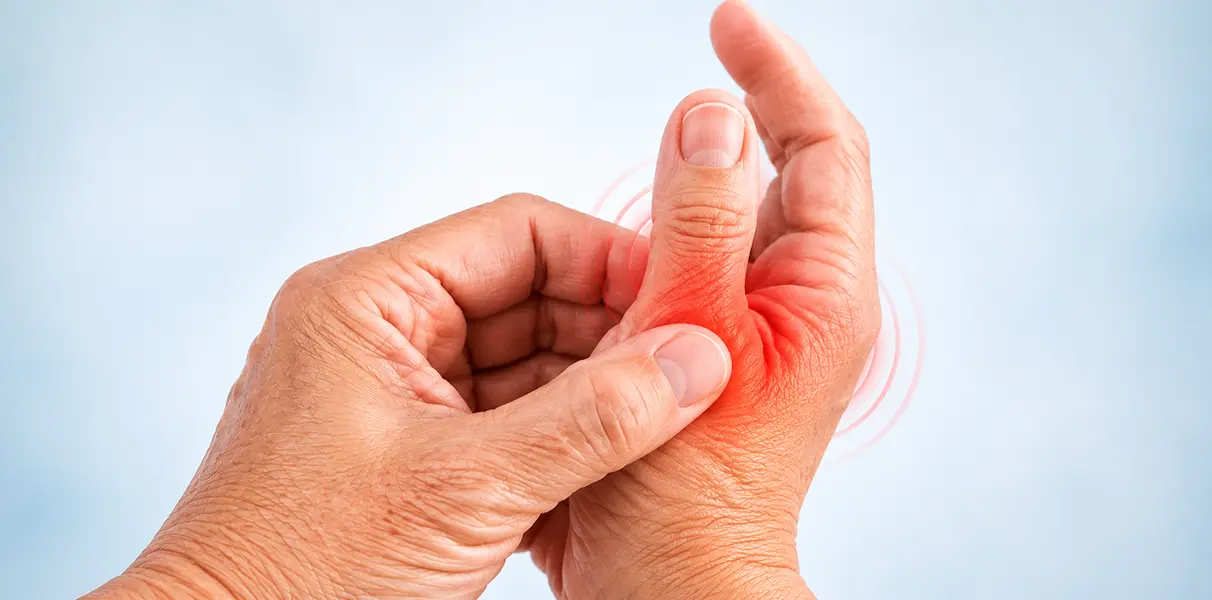
Do you find it hard to move your thumb when you wake up in the morning, feel it catching, or notice that it suddenly snaps open with a “click” when you bend and straighten it? If you experience pain and catching even with simple everyday tasks such as opening a jar, holding a phone, using a pen, or doing up a button, this may be a sign of a condition known as trigger finger.
Trigger finger is one of the conditions most often seen in hand surgery and orthopedic clinics. While it starts with only a mild catching sensation, over time it can cause the finger to lock completely and significantly limit daily activities. Early diagnosis improves the success of treatment and can prevent permanent loss of motion.
In this article, we take a detailed look at the causes of thumb stiffness, locking, and pain, the symptoms of trigger finger, how it is diagnosed, and current treatment options.
What Is Trigger Finger?
Trigger finger is a condition that develops when the tendon sheath, through which the tendons that move the finger pass, narrows or thickens.
Normally, the tendons glide freely inside the sheath, allowing the finger to bend and straighten. But when the tendon or its sheath thickens, this gliding becomes difficult. As a result, the finger may catch, lock, or snap open with a sudden movement during motion.
Although this condition is most often seen in the thumb, it can also affect the other fingers.
Why Does Trigger Finger Develop in the Thumb?
Although the exact cause of trigger finger cannot always be identified, certain risk factors increase the likelihood of developing it.
These include:
- Repetitive hand and finger movements
- Work that requires a strong grip for long periods
- Diabetes
- Rheumatoid arthritis
- Thyroid disorders
- Older age
- Female sex
- Occupations that involve heavy use of the hands
It may be more common in people who constantly use screwdrivers, pliers, scissors, or similar hand tools.
What Are the Symptoms of Trigger Finger?
Symptoms may be mild at first and become more noticeable over time.
The most common symptoms are:
- A catching sensation in the thumb
- A “click” when straightening or bending the finger
- Marked stiffness in the morning
- Pain at the base of the thumb
- Catching during movement
- The finger staying locked for a while
- Tenderness or a small lump at the base of the finger
In advanced stages, the finger may stay in a bent position and the person may have to straighten it with the other hand.
Why Is Thumb Pain Worse in the Morning?
Because the hand and fingers stay still for a long time during the night, swelling around the tendon can become more pronounced.
That is why, in the morning:
- Stiffness,
- Catching of the finger,
- Pain when moving it
are felt more often.
Symptoms may ease temporarily after moving the finger a few times.
How Does Trigger Finger Affect Daily Life?
The thumb plays an active role in most hand functions. That is why trigger finger can make daily activities considerably harder.
Patients may have problems especially when:
- Opening a jar
- Holding a pen
- Using a computer or phone
- Doing up buttons
- Pulling a zipper
- Carrying a bag
- Holding a steering wheel
In untreated cases, grip strength may decrease and hand function may be affected.
What Can It Be Confused With?
Thumb pain and limited movement are not always caused by trigger finger.
Conditions that can cause similar symptoms include:
- Arthritis of the thumb
- De Quervain’s tendinitis
- Carpal tunnel syndrome
- Rheumatic diseases
- Tendon injuries
- Ligament injuries after trauma
That is why an expert evaluation is needed for an accurate diagnosis.
How Is It Diagnosed?
Trigger finger can usually be diagnosed with a detailed physical examination.
Your doctor will:
- Assess the finger’s movements.
- Check for catching or locking.
- Identify where the pain is.
- Check for tenderness over the tendon.
Most patients do not need additional imaging. However, if another condition is suspected, ultrasound or other imaging methods may be used.
How Is Trigger Finger Treated?
Treatment is planned according to the stage of the condition and the severity of the symptoms.
Activity Modification
Reducing repetitive movements that strain the thumb can help relieve symptoms.
Finger Splint
In some patients, a splint worn for a certain period can reduce the load on the tendon.
Medication
Medication used under medical supervision can help reduce pain and inflammation.
Corticosteroid Injection
In suitable patients in the early and middle stages, injections into the tendon sheath can reduce symptoms.
Surgical Treatment
In advanced cases or in patients who do not respond to other treatments, a minor surgical procedure can allow the tendon to move freely.
This procedure is usually short, and many patients can return to their daily lives quickly.
What Should You Pay Attention to at Home?
The following recommendations may help support treatment:
- Reduce movements that strain your fingers.
- Avoid work that requires a strong grip for long periods.
- Do not take painkillers continuously without medical advice.
- Do hand exercises only on expert recommendation.
- Do not postpone an examination if your symptoms are getting worse.
Home measures can relieve symptoms but may not completely resolve the underlying problem.
When Should You See a Doctor?
If you have any of the following symptoms, it is recommended that you see a specialist experienced in orthopedics and traumatology or hand surgery:
- Constant catching of the thumb
- Locking of the finger
- Severe pain
- Being unable to straighten the finger
- Reduced grip strength
- Marked difficulty with daily activities
- Symptoms lasting more than a few weeks
Thanks to early diagnosis, successful results can be achieved without the need for surgery.
Can Trigger Finger Be Prevented?
Although it is not possible to prevent every case, some habits can reduce the risk:
- Take regular breaks from repetitive hand movements.
- Be careful not to overstrain your hand muscles.
- Create ergonomic working conditions.
- Do not neglect the management of chronic conditions such as diabetes.
- Get an expert evaluation early when hand and finger pain begins.
Conclusion
Thumb stiffness, locking, and pain are among the most noticeable signs of trigger finger. Starting with only a mild catching sensation, this condition can over time cause the finger to lock completely and make daily activities difficult.
If you have complaints such as stiffness that is worse in the morning, a clicking sensation when straightening the finger, or the finger getting stuck in a bent position, it is important to see an orthopedics and traumatology specialist without delay. Thanks to early diagnosis and appropriate treatment, finger function can be preserved, pain can be reduced, and quality of life can be significantly improved.

Specialist Opinion
Thumb stiffness, locking, and pain are among the most noticeable signs of trigger finger. Starting with only a mild catching sensation, this condition can over time cause the finger to lock completely and make daily activities difficult.
If you have complaints such as stiffness that is worse in the morning, a clicking sensation when straightening the finger, or the finger getting stuck in a bent position, it is important to see an orthopedics and traumatology specialist without delay. Thanks to early diagnosis and appropriate treatment, finger function can be preserved, pain can be reduced, and quality of life can be significantly improved.
Contact us to have your symptoms assessed and to learn about treatment options that may be right for you. Get in touch .
Frequently Asked Questions
Catching and locking of the thumb is often a sign of trigger finger. When the sheath that the finger tendons glide through narrows or thickens, the tendon can no longer slide freely; the finger may catch, lock, or suddenly snap open with a click.
Because the hand and fingers stay still for a long time during the night, swelling around the tendon can become more pronounced. That is why stiffness, catching, and pain on movement are felt more often in the morning. Symptoms may ease temporarily after moving the finger a few times.
It is more common in people who make repetitive hand and finger movements, do work requiring a strong grip for long periods, or constantly use hand tools such as screwdrivers, pliers, or scissors. Diabetes, rheumatoid arthritis, thyroid disorders, older age, and female sex are also risk factors.
The diagnosis is usually made with a detailed physical examination. The doctor assesses finger movements, whether there is catching or locking, where the pain is, and tenderness over the tendon. Most patients do not need additional imaging; ultrasound may be used if another condition is suspected.
In the early stages, activity modification, a finger splint, medication under medical supervision, and, in suitable patients, a corticosteroid injection into the tendon sheath can relieve symptoms. In advanced cases or when these treatments do not help, a short, minor surgical procedure can allow the tendon to move freely again.
 WhatsApp
 Facebook
 Twitter
 Linkedin





 +90 505 398 34 34
 doctoryavuzarikan@gmail.com
 Book Appointment / Contact