

Severe Heel Pain With the First Step in the Morning: Heel Spur Treatment


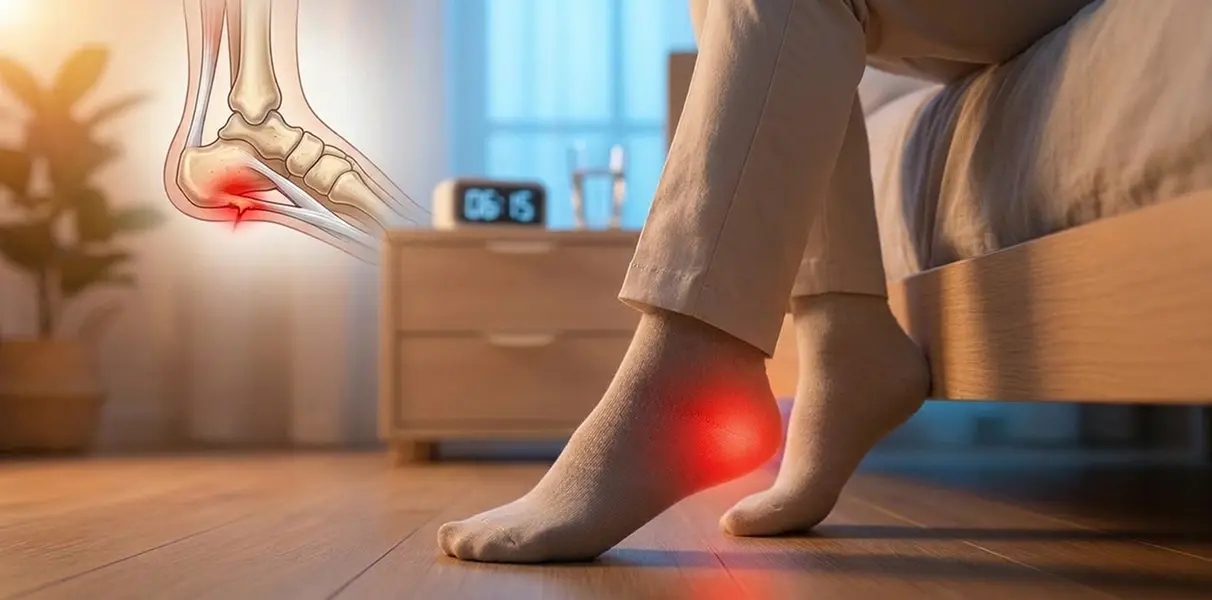
Do you feel a stabbing pain in your heel the moment you get out of bed and put your foot on the floor in the morning? Does the pain ease after a few steps, only to return when you stand up again after sitting for a long time during the day? These symptoms may be related to plantar fasciitis, one of the most common foot problems, often referred to as a heel spur.
Heel pain can significantly affect quality of life. It can make walking difficult, prevent you from exercising, and make it hard to stay on your feet for long periods. The sharp pain felt with the first step in the morning is one of the most characteristic signs of a heel spur. With early diagnosis and appropriate treatment, successful results can be achieved in the vast majority of patients.
In this article, we take a detailed look at the causes and symptoms of heel spurs, how they are diagnosed, and current treatment options.
What Is a Heel Spur?
A heel spur is a bony growth that forms on the underside of the heel bone. However, the actual cause of the pain is usually not this bony growth but strain and inflammation of the connective tissue called the plantar fascia, which runs from the heel bone to the toes.
The plantar fascia is a strong tissue that supports the natural arch of the foot. Repeated loading can cause small tears in this structure, and inflammation can develop over time. This leads to severe heel pain, felt especially with the first step in the morning.
Why Is the Pain Worse With the First Step in the Morning?
The pain of a heel spur is more noticeable in the morning because the plantar fascia shortens while you rest during the night.
When you stand up in the morning:
- The plantar fascia is suddenly stretched.
- Weight is placed on the heel.
- Pain develops in the stretched tissue.
After walking for a few minutes, the tissue starts to loosen, so the pain usually eases. However, the same thing can happen again when you stand up after sitting for a long time.
What Are the Symptoms of a Heel Spur?
The most common symptoms in people with a heel spur are:
- Severe heel pain with the first step in the morning
- Stabbing pain on the underside of the heel
- Pain when standing up after sitting for a long time
- Pain that increases after standing for a long time
- Discomfort when walking barefoot on hard floors
- Tenderness in the heel after exercise
Pain that is mild at first can over time reach a level that affects daily life.
Who Gets a Heel Spur More Often?
Some people are at higher risk of developing a heel spur.
Risk factors include:
- Standing for long periods at work
- Being overweight
- Running and sports
- Flat feet
- High arches
- Wearing unsuitable shoes
- Tight calf muscles
- Middle and older age
It is more common among teachers, healthcare workers, factory workers, and people who are on their feet all day.
Are a Heel Spur and Plantar Fasciitis the Same Thing?
Although these two terms are often used together, they are not the same.
Plantar fasciitis is inflammation of the plantar fascia.
A heel spur, on the other hand, is a bony growth on the heel bone.
Not every patient with a heel spur has pain. The pain mostly comes from inflammation of the plantar fascia.
Other Conditions That Cause Heel Pain
Not all heel pain means a heel spur.
Conditions that can cause similar complaints include:
- Achilles tendinitis
- Thinning of the heel fat pad
- Nerve entrapment
- Stress fractures
- Rheumatic diseases
- Bursitis
That is why an expert evaluation is important for an accurate diagnosis.
How Is It Diagnosed?
Diagnosis begins with a detailed medical history and a physical examination.
Your doctor will:
- Assess the exact location of the pain.
- Examine how you place your foot.
- Check for tenderness along the plantar fascia.
- Assess your ankle’s range of motion.
When needed, the following imaging methods may be used:
- X-ray
- Ultrasound
- Magnetic Resonance Imaging (MRI)
Although an X-ray is useful for showing a heel spur, it may not explain the source of the pain on its own.
How Is a Heel Spur Treated?
Treatment is planned according to the severity and duration of the patient’s symptoms.
Rest and Activity Modification
Temporarily reducing activities that make the pain worse can support healing.
Stretching Exercises
Exercises that stretch the plantar fascia and calf muscles are among the most important steps of treatment.
Physical Therapy
Physical therapy can help reduce pain and support tissue healing.
Orthotic Insoles
Custom insoles can improve the distribution of weight across the foot and reduce the load on the plantar fascia.
Medication
Medication used on your doctor’s advice can help bring pain and inflammation under control.
ESWT (Shock Wave Therapy)
ESWT, one of the non-surgical treatment options, can help reduce pain in suitable patients.
Injection Treatments
In some patients, corticosteroid or other injection treatments may be considered.
Surgical Treatment
Surgery may be considered for patients who have not responded to other treatments over a long period and whose daily lives continue to be seriously affected. However, the vast majority of patients recover without needing surgery.
What Should You Pay Attention to at Home?
The following recommendations may help support treatment:
- Choose supportive shoes.
- Avoid walking barefoot on hard floors for long periods.
- If you are overweight, try to lose weight.
- Do calf and sole stretching exercises regularly.
- Limit activities that make the pain worse.
- If you have to stand for a long time, take regular breaks.
These recommendations can improve the success of treatment.
When Should You See a Doctor?
If you have any of the following symptoms, it is recommended that you see an orthopedics and traumatology specialist:
- Severe heel pain with the first step in the morning
- Heel pain lasting more than a few weeks
- Pain that makes everyday walking difficult
- Swelling or redness of the heel
- Pain that does not go away with rest
- Difficulty putting weight on the foot
Early evaluation makes it possible to rule out other conditions and plan appropriate treatment.
Can a Heel Spur Be Prevented?
Some recommendations that may help reduce the risk of a heel spur are:
- Maintain a healthy weight.
- Wear shoes that suit your feet.
- Do stretching exercises regularly.
- Do not skip warming up before sports.
- Do not ignore foot pain.
- If you stand for long periods, make sure to rest your feet.
These measures can help protect the plantar fascia and reduce the risk of developing pain.
Conclusion
Severe heel pain felt with the first step in the morning is often related to a heel spur and plantar fasciitis. Pain that at first appears only in the morning can spread throughout the day over time and make walking difficult.
If your heel pain lasts more than a few weeks, affects your daily life, or does not improve with rest, it is important to see an orthopedics and traumatology specialist for an accurate diagnosis and appropriate treatment planning. Thanks to early diagnosis, pain can be brought under control, mobility can be preserved, and quality of life can be significantly improved.

Specialist Opinion
Severe heel pain felt with the first step in the morning is often related to a heel spur and plantar fasciitis. Pain that at first appears only in the morning can spread throughout the day over time and make walking difficult.
If your heel pain lasts more than a few weeks, affects your daily life, or does not improve with rest, it is important to see an orthopedics and traumatology specialist for an accurate diagnosis and appropriate treatment planning. Thanks to early diagnosis, pain can be brought under control, mobility can be preserved, and quality of life can be significantly improved.
Contact us to have your symptoms assessed and to learn about treatment options that may be right for you. Get in touch .
Frequently Asked Questions
The plantar fascia shortens while you rest during the night. When you stand up in the morning, this tissue is suddenly stretched and weight is placed on the heel, causing severe pain. The pain usually eases after a few minutes of walking as the tissue loosens, but it can return when you stand up after sitting for a long time.
No. Plantar fasciitis is inflammation of the plantar fascia, the tissue that runs from the heel bone to the toes, while a heel spur is a bony growth on the heel bone. Not every heel spur causes pain; the pain mostly comes from inflammation of the plantar fascia.
It is more common in people who stand for long periods at work, are overweight, run or do sports, have flat feet or high arches, wear unsuitable shoes, have tight calf muscles, or are middle-aged or older.
A detailed history and physical examination assess the exact location of the pain, how you place your foot, tenderness along the plantar fascia, and ankle range of motion. If needed, X-ray, ultrasound, or MRI may be used. Although an X-ray can show a heel spur, it may not explain the source of the pain on its own.
Most patients recover without needing surgery. Rest and activity modification, stretching exercises, physical therapy, orthotic insoles, medication, ESWT (shock wave therapy), and injections in some patients can be used. Surgery is considered for patients who do not respond to these treatments over a long period.
 WhatsApp
 Facebook
 Twitter
 Linkedin






 +90 505 398 34 34
 doctoryavuzarikan@gmail.com
 Book Appointment / Contact